

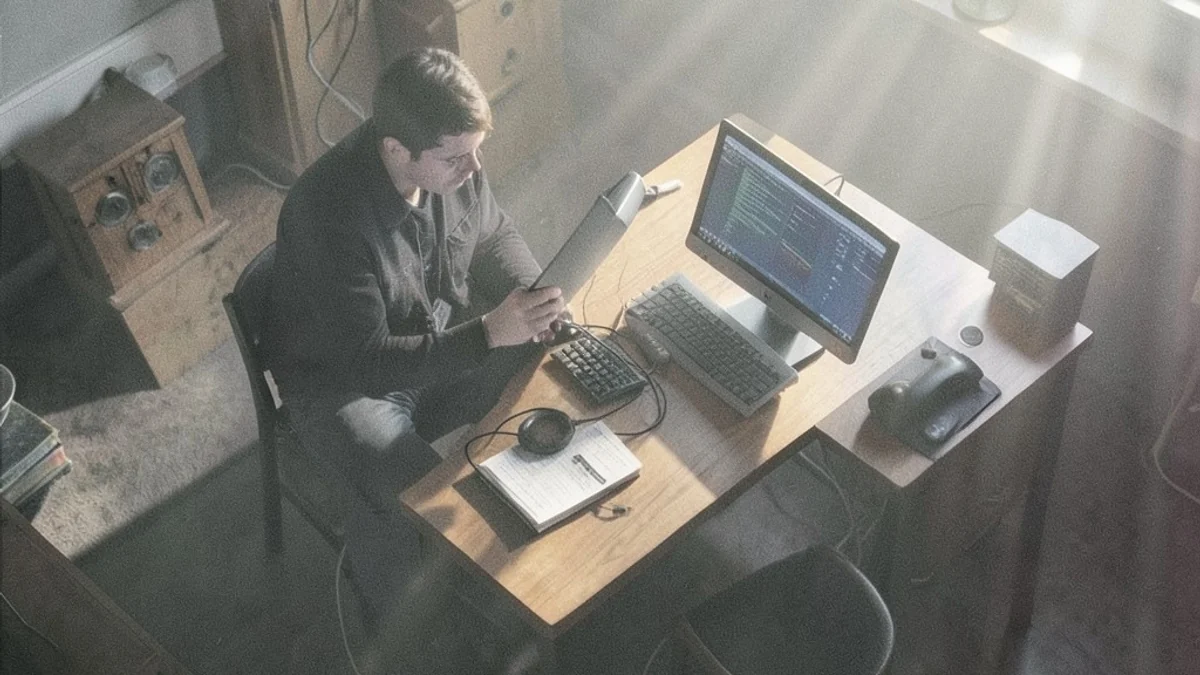
Love is verifying authentic vocal resonance before opening your heart.
For three decades at the Cheltenham Bureau, I have watched the architecture of deception evolve from poorly typed wire-transfer pleas to high-definition psychological orchestration. We have traded the clumsy grammatical errors of the early century for polished personas that breathe, laugh, and speak with terrifying fidelity. Today, the modern romance syndicate no longer needs to type out their seduction; they clone it. The proliferation of generative audio has transformed the telephone call from a foolproof authenticity check into an elaborate theatrical production. When a suitor’s voice sounds pristine over a cellular line, our cognitive biases immediately lower the drawbridge. We mistake acoustic clarity for emotional honesty.
This safety-dossier analysis examines how bad actors exploit neural text-to-speech engines and low-latency voice models to bypass emotional guardrails. By studying the mechanics of synthetic telephony, we can restore a rational baseline to modern courtship before digital illusion replaces human reality.
Key Takeaways Dossier
- Synthetic speech models require remarkably minimal sample audio—often less than ten seconds harvested from public social media videos—to accurately replicate timber, accent, and cadence.
- Automated telephony scripts allow fraudsters to conduct dozens of simultaneous romantic overtures while maintaining real-time voice synthesis during brief phone check-ins.
- Unscheduled friction remains the ultimate diagnostic tool; scammers consistently avoid spontaneous video connections or sudden mid-conversation requests that disrupt their pre-rendered audio pipelines.
- Establishing rigorous verification protocols protects both emotional well-being and financial capital from sophisticated pig-butchering syndicates operating across international jurisdictions.
The Mechanics of Synthetic Audio Seduction
The modern ai voice cloning romance scam 2026 operates on a terrifyingly simple premise: people believe what their ears register as familiar. When a target receives a WhatsApp voice note or a quick mobile phone greeting from someone they met on an application, the brain performs an immediate shortcut. We hear a laugh, a regional cadence, or a familiar breath pattern, and our skepticism evaporates. Fraud syndicates harvest these audio samples from promotional videos, corporate LinkedIn introductions, or Instagram stories. They feed these clips into localized neural processors, rendering an infinite library of custom dialogue spoken in a phantom voice.
What makes this iteration of fraud particularly insidious is the erasure of telltale robotic artifacts. Older text-to-speech engines sounded like automated airline check-in kiosks. Contemporary models replicate micro-pauses, vocal fry, and regional Gloucestershire or London inflections with chilling precision. They can whisper sweet nothings or project urgent distress with equal acoustic authority. Understanding this threat requires acknowledging that seeing or hearing is no longer believing without secondary contextual validation.
Spotting Acoustic Telemetry and Scripted Cadence
Despite technological advancements, synthetic audio engines still struggle with the messy, unscripted chaos of genuine human conversation. When evaluating a potential romantic interest whose availability is strictly curated, look for specific behavioral telemetry. Real humans interrupt one another, stumble over complex sentences, react dynamically to ambient noise, and embrace conversational tangents. Synthetic or pre-scripted voice clips, conversely, possess an unnatural acoustic cleanliness. They are frequently delivered in monologue bursts following a specific prompt, followed by long periods of digital silence while the fraudster generates the next conversational block.
Furthermore, pay close attention to environmental acoustics. If a suitor claims to be walking through a bustling London train station or sitting in a noisy cafe, yet their voice track sounds as if it were recorded inside an anechoic sound booth with zero background leakage, your internal alarm should sound. Fraudsters frequently mask their audio generation environment behind artificial white noise tracks or insist on communicating exclusively through asynchronous voice notes rather than live, fluid dialogue.
Implementing Unscheduled Friction and Verification Protocols
Defending against modern synthetic deception requires introducing healthy friction into the courtship timeline. Fraudsters rely on momentum and convenience; they want the relationship to accelerate smoothly toward investment tips, emergency travel funds, or cryptocurrency platforms without interruption. To disrupt this pipeline, prioritize unscheduled, spontaneous verification methods. Ask for a sudden video check-in during an ordinary moment of the day, or request that they touch their nose or hold up a specific household object during a live call.
Before committing emotional or financial resources to any digital connection, it pays to run a systematic diagnostic on the relationship’s foundational markers. You can utilize our client-side Dating Risk Calculator to evaluate threat vectors safely, cross-referencing behavioral patterns, image persistence, and communication velocity against documented fraud vectors. Real affection welcomes gentle scrutiny; synthetic personas crumble the moment they are asked to step outside their pre-programmed operational script.
Frequently Asked Questions
How much audio do fraudsters actually need to clone a voice?
Modern neural text-to-speech models can achieve a convincing conversational likeness using as little as ten to fifteen seconds of clean audio. Publicly accessible videos, wedding toasts posted online, or professional webinar recordings provide more than enough source material for a synthetic replica.
Why do romance scammers prefer voice notes over live phone calls?
Voice notes allow fraudsters to maintain absolute control over the narrative while bypassing the technical limitations and latency issues of real-time voice generation. It also provides a convenient excuse to avoid spontaneous live video interactions under the guise of poor cellular connectivity or busy work schedules.
What is the most reliable way to unmask an AI voice clone?
Insist on a live, unscripted video call where you can observe physical micro-expressions and real-time movement simultaneously with speech. Synthetic audio generators frequently experience rendering delays or synchronization anomalies when forced to operate within a live, two-way visual medium.
Can reverse image searches help identify these synthetic personas?
Yes, reverse image lookups remain an essential baseline check, though modern syndicates increasingly rely on AI-generated facial models rather than stolen photographs. Combining image verification with acoustic scrutiny provides a comprehensive shield against multi-channel deception.
⚡ Quick Scan: Is Your Dating Match Real?
Instant cross-reference against verified anti-bot database and spoofing patterns.